
An aluminum can crusher machine is a heavy-duty recycling equipment to flatten empty aluminum cans, tin cans, and composite packaging (such as Tetra Pak cartons) into thin, uniform sheets of 1–2 mm thickness. Its primary purpose is to dramatically reduce the volume of waste cans — by up to 80–90% — making storage, transportation, and downstream recycling far more cost-effective.
Suitable raw materials include empty cola cans, beer cans, beverage cans, food tins, aluminum cans, and paper-aluminum composite cartons. Available in multiple models, the machine offers a processing capacity ranging from 100 kg/h to 2,600 kg/h , making it ideal for both small-scale scrap yards and large industrial recycling facilities.
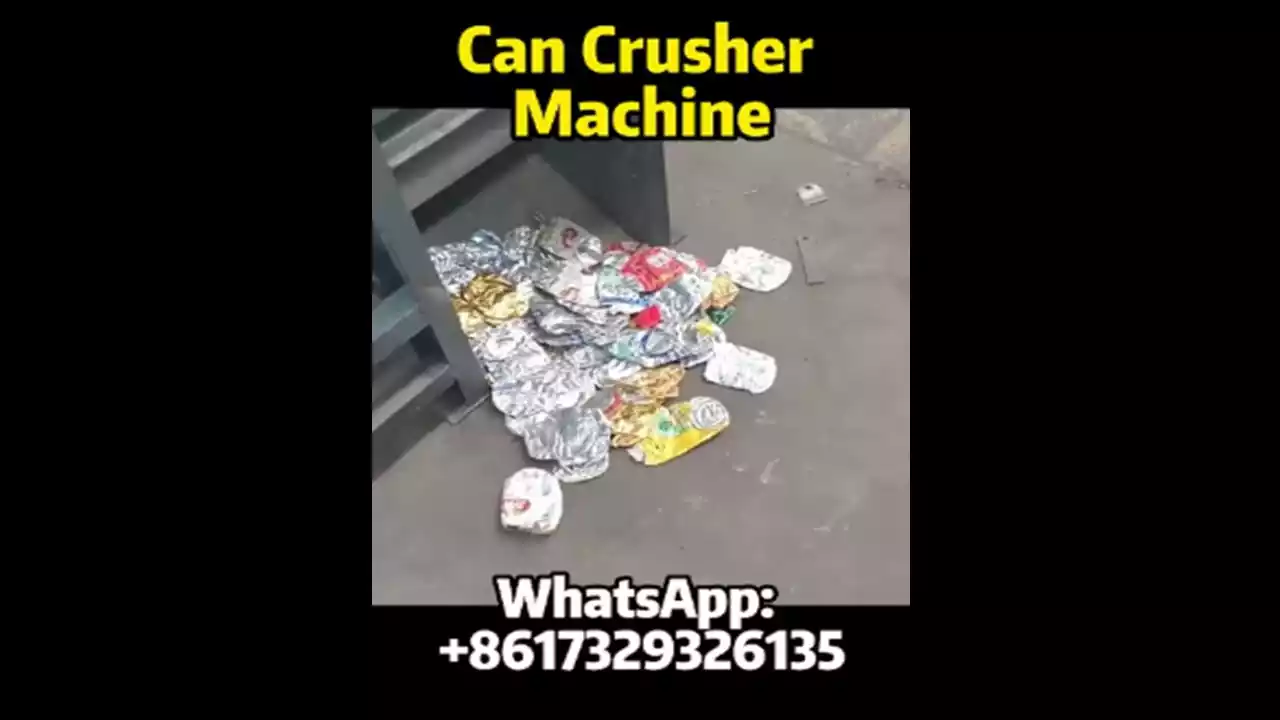
Commercial Aluminum Can Crusher Machine
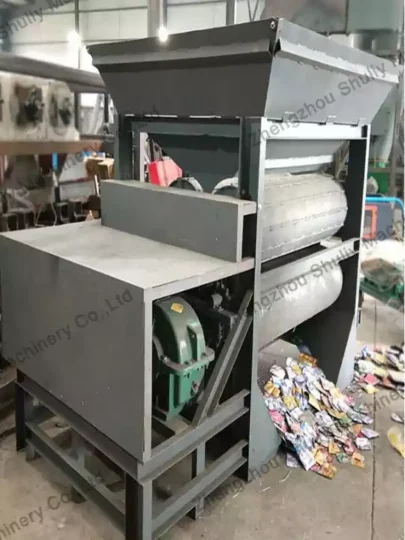
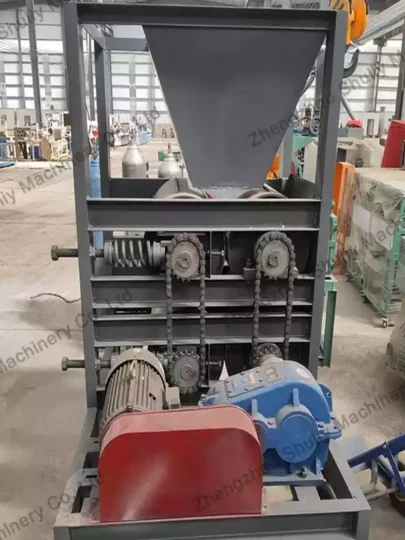
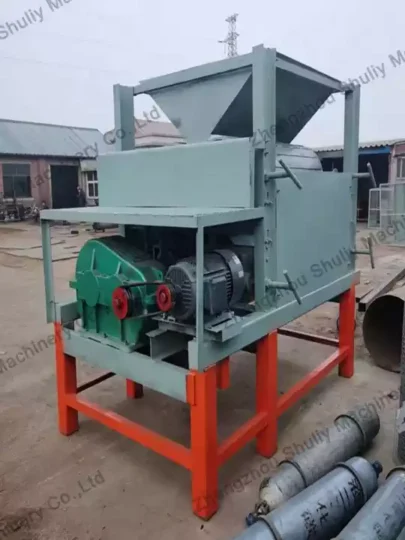
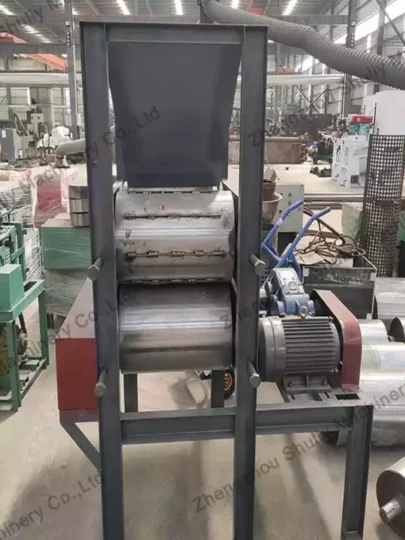
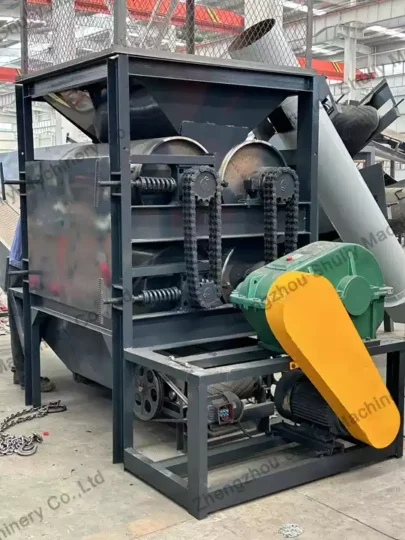
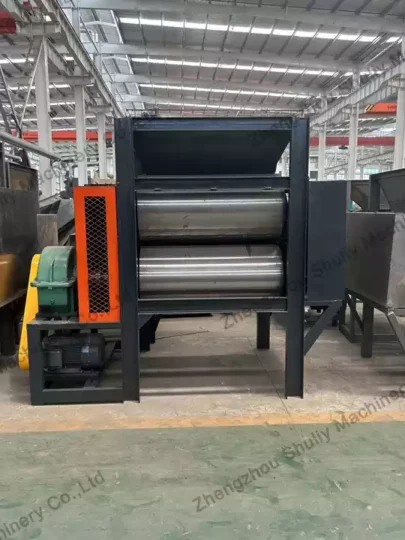
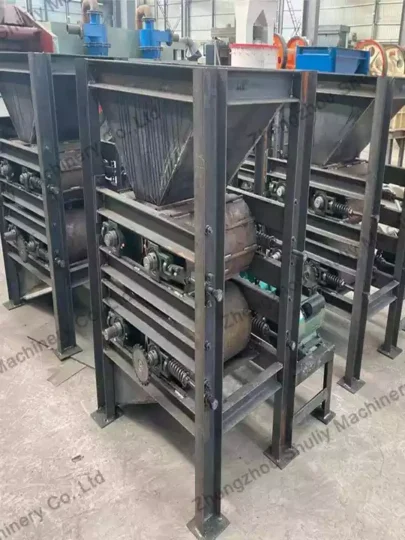
An aluminum can crusher machine — also known as a can crushing machine , can flattener , or metal can compactor — is a specialized piece of recycling machinery built around two pairs of heavy-duty steel compression rollers. Unlike manual can crushers that process one can at a time, this industrial machine handles bulk quantities continuously, automatically flattening hundreds or thousands of cans per hour into compact, stackable sheets.
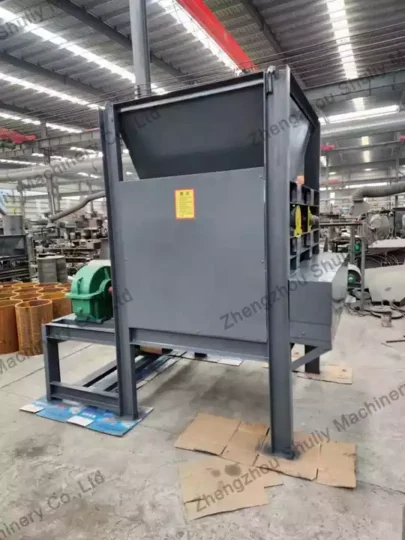
Manufactured with a reinforced steel frame and powered by an electric motor combined with a gear reducer, the machine delivers the high torque needed to crush metal cans without jamming or deforming the rollers. Its robust construction ensures years of reliable operation in demanding recycling environments.
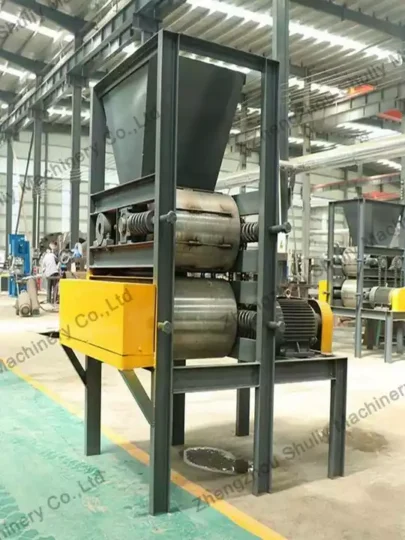
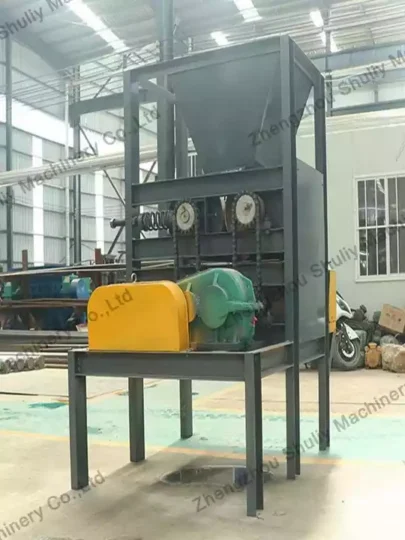
How Does the Can Crushing Machine Work?
The working principle of an aluminum can crusher is straightforward and efficient:
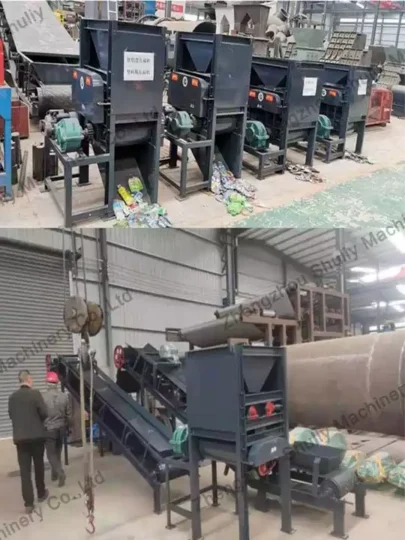
- Feeding — Empty cans are loaded into the top hopper, either manually or via a conveyor belt.
- First-stage compression — The cans fall between the upper pair of counter-rotating steel rollers, which squeeze them into an initial flattened form.
- Second-stage compression — The partially crushed cans then pass through the lower pair of rollers, which apply a second, more precise compression to achieve a final thickness of 1–2 mm.
- Discharge — The flattened can sheets exit from the bottom of the machine, ready for collection, bagging, or direct transport to smelters.
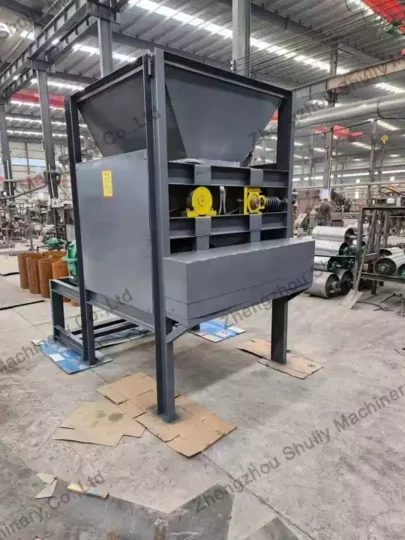
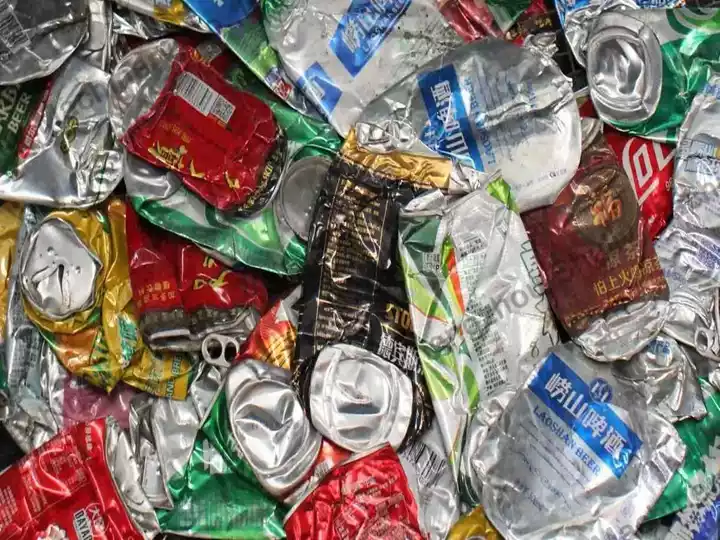
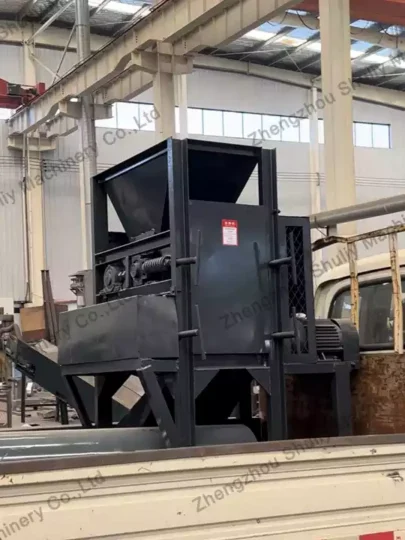
A spring-loaded tension adjustment mechanism allows operators to fine-tune the roller gap, ensuring consistent output thickness while preventing damage from accidental overfeeding.
What Materials Can Aluminum Can Crusher Machine Crush?
The can crushing machine is highly versatile and processes a wide range of empty metal and composite containers:
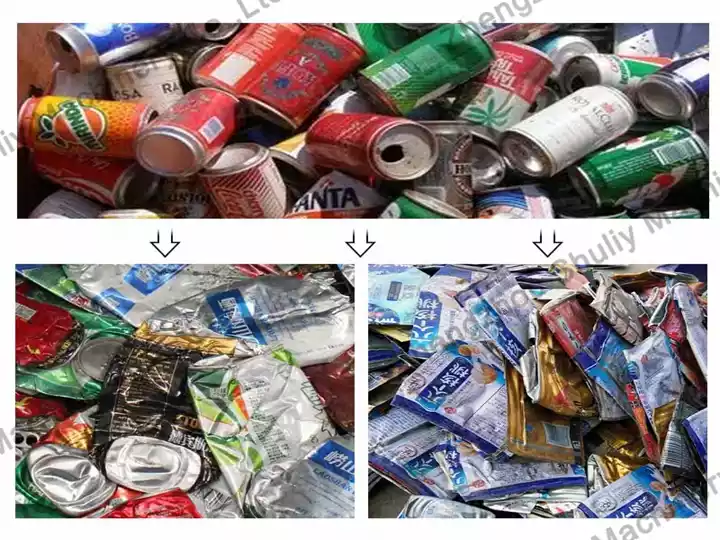
- Aluminum cans — cola, beer, energy drink, and juice cans.
- Tin-plated steel cans — food cans, fruit tins, oil tins.
- Beverage cans — soda cans, beer cans, canned coffee.
- Composite packaging — Tetra Pak cartons, milk boxes, juice boxes (paper-aluminum-PE laminate).
- Other metal cans — aerosol cans (emptied), paint cans (cleaned) Note: Ensure cans are empty and free of liquids before feeding to maintain optimal performance.
Aluminum Can Crusher Machine Key Features & Advantages
- High Compression Efficiency: Adopts a double-roller structure to realize two-stage crushing. It can reduce the volume of cans by 80–90%, effectively saving storage space and lowering transportation expenses.
- Wide Capacity Selection: Multiple models are available with processing capacity from 100 kg/h up to 2,600 kg/h, suitable for small scrap collection points as well as large recycling factories.
- Sturdy and Long Service Life: Equipped with thick steel frame, hardened alloy rollers and industrial gear reducers (200/250/350/500 type), supporting stable continuous heavy-duty running.
- Adjustable Discharge Thickness: The spring tension structure enables adjustable roller clearance, and the flattened sheet thickness can be controlled at 1–2 mm to match your follow-up processing requirements.
- Simple Operation & Low Maintenance: Features straightforward control buttons and well-designed feeding hopper. Fewer wearing parts reduce daily maintenance workload.
- Versatile Material Adaptability: It can crush aluminum cans, tin cans, Tetra Pak and other paper-metal composite packaging materials to expand your recycling business scope.
Technical Specifications & Models
Our aluminum can crusher machines are available in 9 configurations to match different throughput requirements:
| Modelo | Dimensions (L×W×H, mm) | Potência do Motor | Roller Dia. (mm) | Espessura da Folha | Capacidade (kg/h) |
|---|---|---|---|---|---|
| 400 | 1040×1270×1500 | 3 kW | 299 | 1–2 mm | <100 |
| 600 | 1080×1430×1600 | 4 kW | 299 | 1–2 mm | <180 |
| 600-H | 1280×1510×1850 | 7,5 kW | 406 | 1–2 mm | <260 |
| 800 | 1750×1250×1900 | 7,5 kW | 406 | 1–2 mm | <300 |
| 1000 | 2050×1300×2000 | 11 kW | 406 | 1–2 mm | 500–700 |
| 1000-H | 2300×1570×2200 | 15 kW | 508 | 1–2 mm | 1100–1300 |
| 1200 | 2300×1450×2000 | 11 kW | 406 | 1–2 mm | 700–900 |
| 1200-H | 2695×1600×2250 | 15 kW | 560 | 1–2 mm | 1800–2000 |
| 1500 | 3000×1560×3020 | 15 kW | 560 | 1–2 mm | 2000–2600 |
Why Choose Our Aluminum Can Crusher?
- Proven manufacturer — We are a direct factory with years of experience in recycling equipment, ensuring factory-direct pricing and genuine quality.
- Customizable configurations — Hopper size, roller material, and output can be tailored to your specific recycling line.
- Global shipping — Machines are exported worldwide with secure packaging and professional after-sales support.
- Fast ROI — By reducing transport volume and increasing scrap density, the machine pays for itself through lower logistics costs and higher resale value of compressed aluminum.
- Comprehensive warranty — Backed by a manufacturer warranty and readily available spare parts.
Can Flattening Machine Applications & Industries
The aluminum can crusher machine serves a broad range of sectors:
- Scrap yards & recycling centers — bulk can processing.
- Aluminum smelters & foundries — pre-treatment of raw material.
- Beverage & brewery companies — in-house can waste management.
- Food canning factories — handling production off-cuts and rejected cans.
- Municipal waste sorting facilities — volume reduction of metal waste.
- Waste management & environmental contractors.
How to Select the Right Model?
Choosing the right can crusher depends on three key factors:
- Daily throughput — Estimate your daily can volume. A small scrap yard may only need the Model 400 (100 kg/h), while a large recycling plant should consider the Model 1200-H or 1500 (1,800–2,600 kg/h).
- Available space — Check the machine dimensions against your facility layout. Larger models require more floor area and ceiling height.
- Power supply — Ensure your site can deliver the required motor power (3–15 kW) and three-phase electricity. Pro tip: If you expect future growth, select a model with slightly higher capacity than your current needs.
Operation & Maintenance Tips
Operation
- Ensure cans are empty and free of large debris before feeding.
- Start the motor and wait for rollers to reach full speed before loading material.
- Feed cans evenly to avoid jamming.
- Never place hands or tools near the rollers during operation.
Maintenance
- Daily: Clean the rollers and discharge chute; check for loose bolts.
- Weekly: Lubricate bearings and inspect chain tension.
- Monthly: Check roller wear and replace springs if tension decreases.
- Annually: Perform a full inspection of the gear reducer oil and electrical components.
Conclusão
Investing in an aluminum can crusher machine is one of the most cost-effective decisions for any recycling operation. By flattening cans to just 1–2 mm thick, you drastically reduce storage needs, lower transport costs, and increase the value of your scrap aluminum.
With 9 model options ranging from 100 kg/h to 2,600 kg/h, there is a configuration perfectly suited to your throughput and budget.
To further streamline your recycling workflow and boost packing density, we also supply matching hydraulic balers.
The flattened can sheets from the crusher can be directly fed into the baler to form neat, compact bales, making loading, stacking and long-distance shipment much easier. This crusher + baler combination helps you maximize overall recycling profit.