
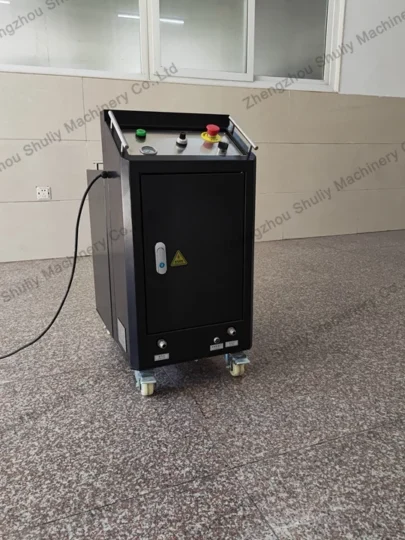
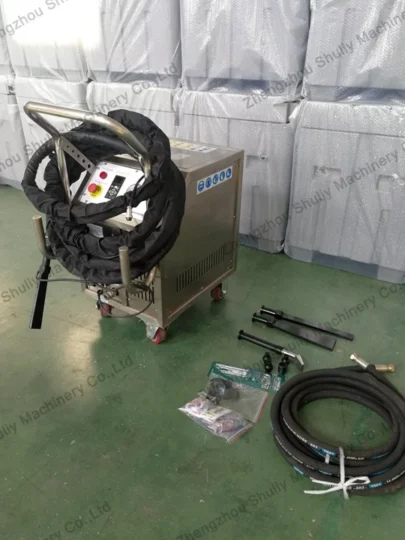
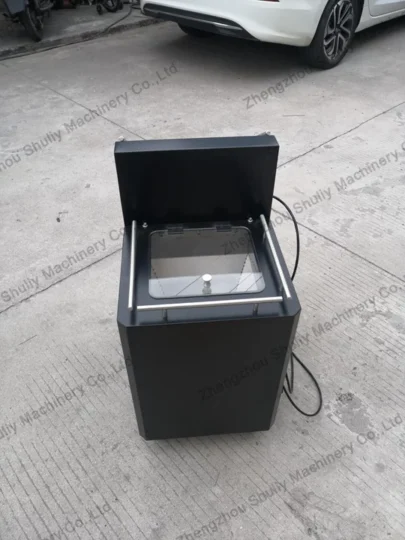
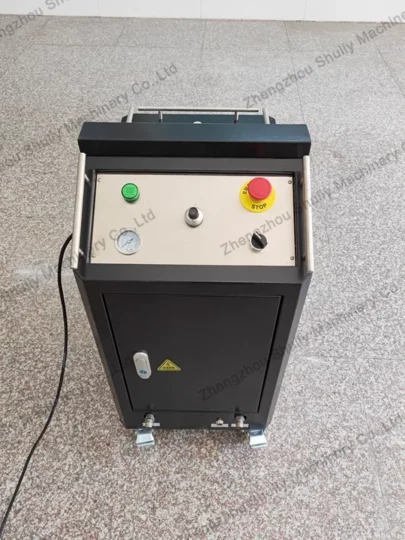
A Dry Ice Cleaning Machine is an industrial cleaning device that uses compressed air to propel dry ice pellets onto contaminated surfaces, removing oil, grease, carbon deposits, mold release agents, adhesives, and other stubborn residues. It provides a dry, non-abrasive cleaning solution for manufacturing plants, automotive workshops, food processing facilities, mold factories, printing plants, and electronics industries.
With adjustable dry ice consumption, different machine configurations can serve small workshops and demanding industrial cleaning applications. Depending on the model, dry ice consumption can range from approximately 0–2 kg/min to 0–5 kg/min, allowing users to select equipment according to their cleaning requirements.
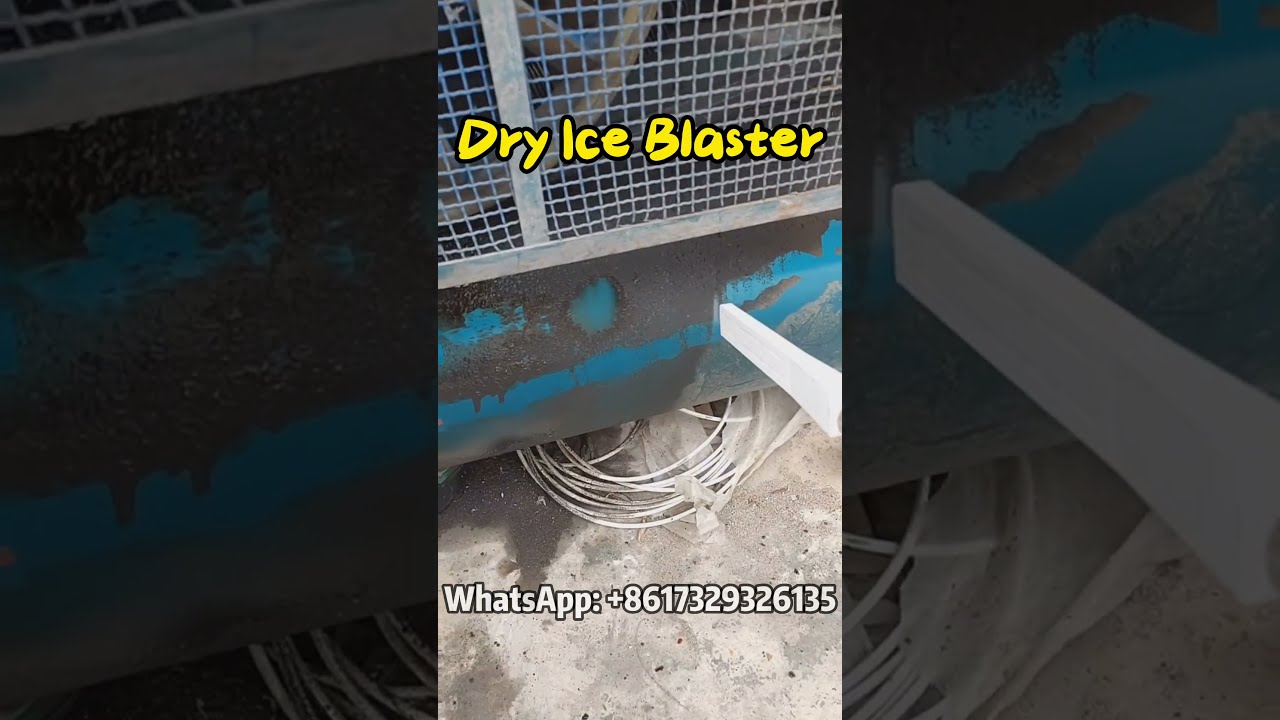
Industrial Dry Ice Cleaning Machine
A dry ice cleaning machine, also known as a dry ice blaster or dry ice blasting machine, uses solid carbon dioxide (CO₂) pellets as the cleaning medium. Unlike conventional cleaning equipment that relies on water, chemical solvents, or abrasive materials, this machine uses high-speed dry ice particles to remove contaminants while helping preserve the original surface.
When dry ice pellets hit a contaminated area, the low temperature makes many deposits brittle, while the impact and rapid sublimation of the dry ice help detach dirt from the surface. The dry ice then changes directly from a solid into gas, leaving no residual blasting media behind.
This technology is suitable for cleaning equipment that is difficult to dismantle or that requires minimal moisture during maintenance. However, the removed dirt still needs to be collected, and the suitability of the method depends on the surface material and type of contamination.
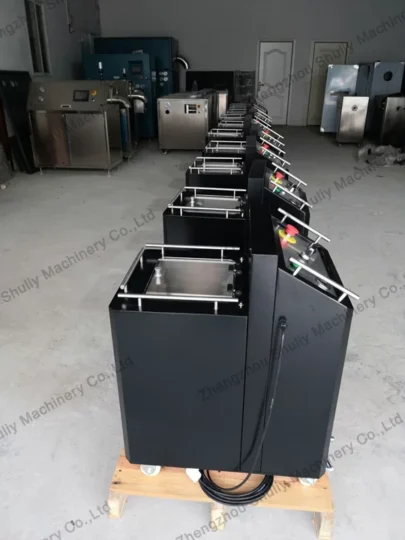
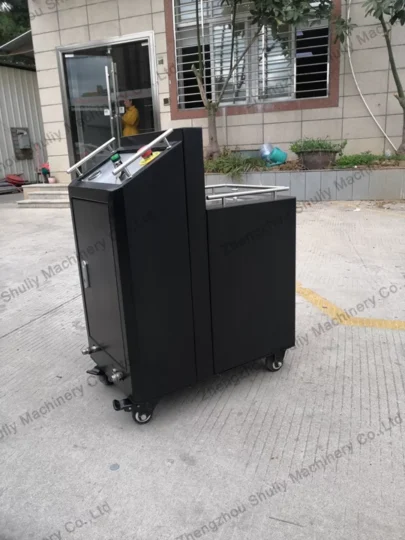
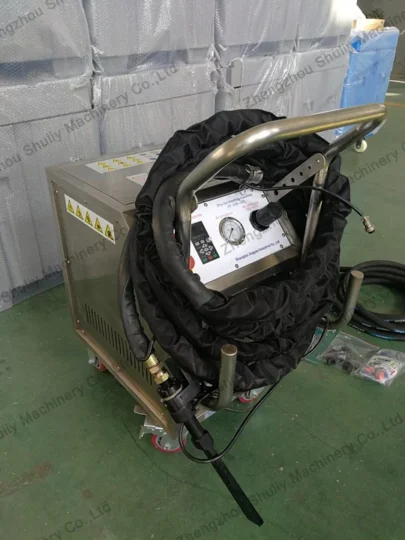
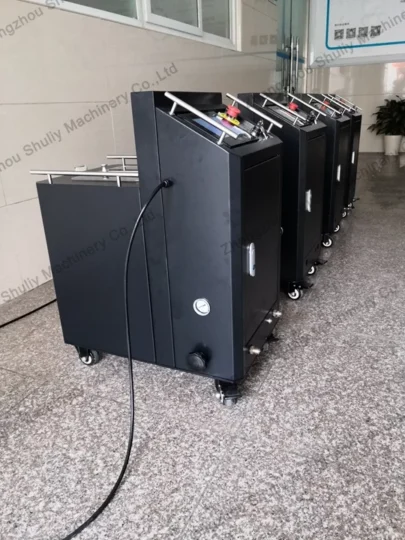
How Does a Dry Ice Cleaning Machine Work?
A dry ice cleaning machine uses compressed air to propel dry ice pellets onto contaminated surfaces, removing dirt, grease, and stubborn residues. The cleaning process consists of four main steps:
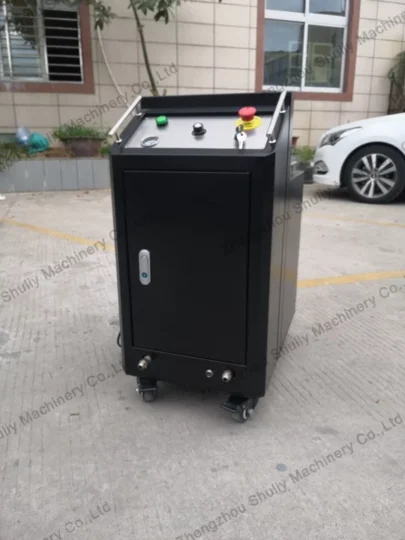
- Load the Dry Ice Pellets: Fill the machine hopper with suitable dry ice pellets, typically 3 mm in diameter, to prepare for the cleaning process.
- Connect the Air Compressor: Connect the dry ice cleaning machine to an external air compressor that provides the required working pressure and airflow.
- Blast the Contaminated Surface: Start the machine and direct the blasting nozzle toward the target area. High-speed dry ice pellets loosen and remove grease, oil, carbon deposits, and other contaminants.
- Complete the Cleaning Process: The dry ice pellets rapidly sublimate into CO₂ gas after impact, leaving no spent blasting media or wash water behind. Any loosened dirt and removed contaminants must still be collected or cleaned away.
Key Features of Our Dry Ice Cleaning Machine
- Non-Abrasive Cleaning: The dry ice cleaning machine uses high-speed dry ice pellets to remove contaminants without conventional abrasive media. It is suitable for many metal, plastic, and rubber surfaces, while delicate coatings and sensitive components should be tested before cleaning.
- Water-Free and Chemical-Free Process: This machine cleans without water or chemical solvents, making it a practical choice for equipment that must remain dry and for applications where solvent residues are undesirable.
- Adjustable Dry Ice Consumption: The dry ice feed rate can be adjusted according to the cleaning task. Lower feed rates are suitable for lighter contamination, while heavier deposits may require more dry ice and a higher compressed-air supply.
- Reduced Equipment Downtime: Dry ice blasting can clean many machines and components without extensive disassembly. This helps simplify maintenance procedures and may reduce production interruptions.
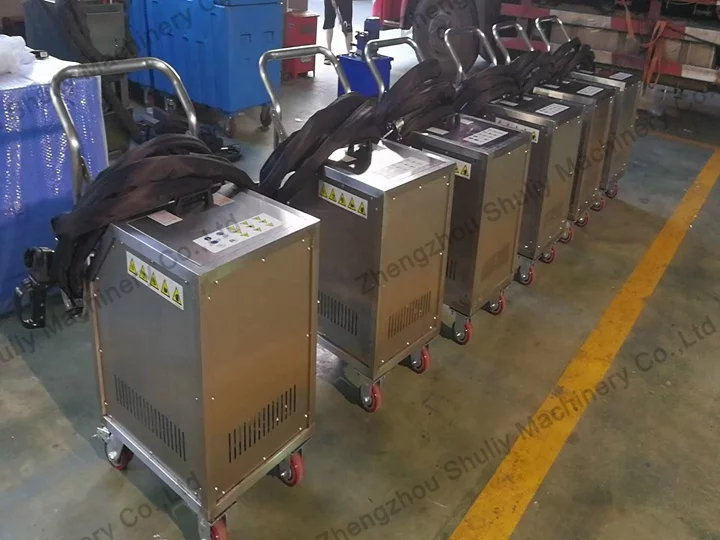
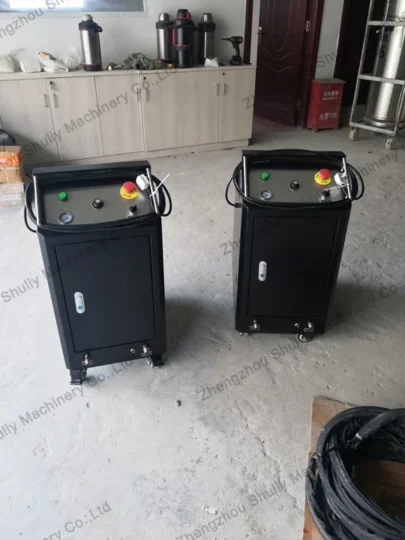
- Flexible Machine Configurations: Different hopper capacities, dry ice feed rates, and compressed-air requirements are available to meet various industrial cleaning needs. The machine can also be integrated with dry ice pellet production and storage equipment for a more complete cleaning solution.
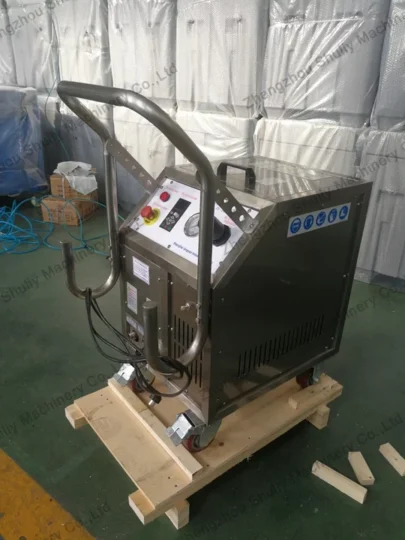
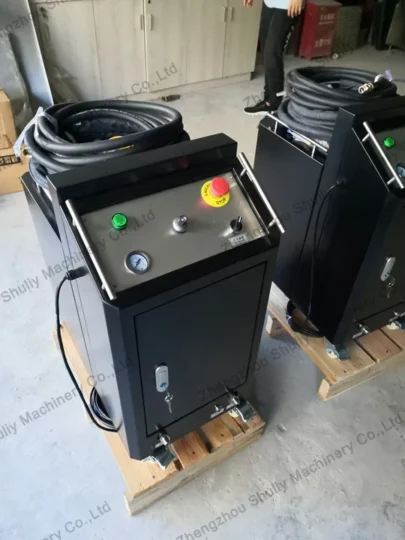
Technical Specifications of the Dry Ice Cleaning Machine
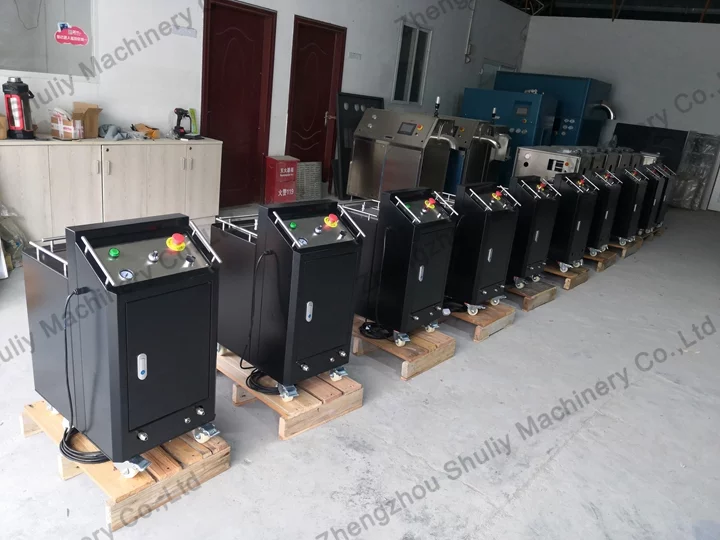
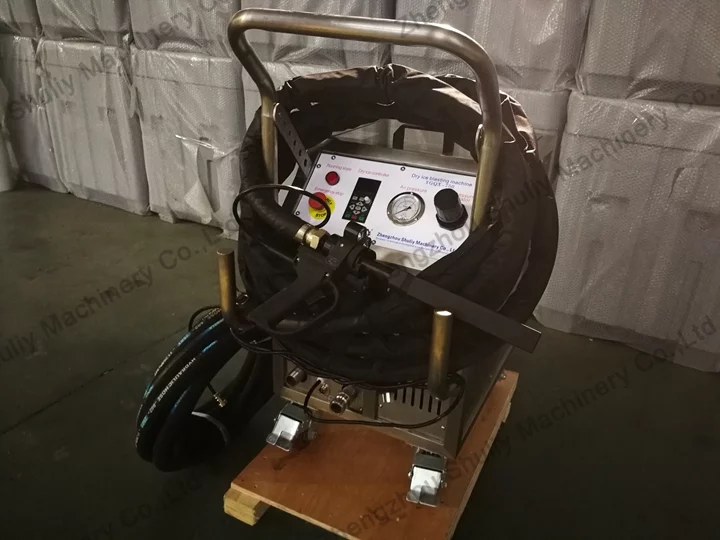
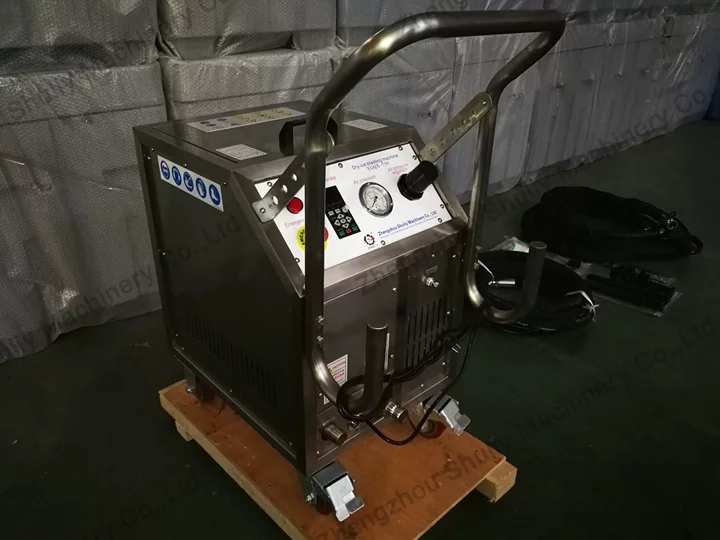
The following specifications illustrate a typical SL-HR-QX-50 configuration. Actual parameters vary by model and configuration.
| 参数 | 规格参数 |
|---|---|
| 型号 | SL-HR-QX-50 |
| Dry ice pellet diameter | Approximately 3 mm |
| Dry ice hopper capacity | 25 L |
| Dry ice consumption | 0–2 kg/min |
| Working pressure | 4–10 bar |
| Compressed-air consumption | 2–3 m³/min |
| 2900×650×1350 | 220–240 V, single-phase, 50/60 Hz |
| 电机功率 | 750 W |
| 机器重量 | 75 kg |
| Dimensions | 620 × 400 × 810 mm |
For other industrial configurations, dry ice consumption can reach approximately 5 kg/min, with hopper capacities of 25 kg, 35 kg, or 50 kg. These figures refer to different machine configurations, not one machine’s standard specification.
Note: The dry ice blaster requires an external compressed-air source. The required compressor capacity depends on the selected model, operating pressure, and airflow demand.
Applications of the Dry Ice Cleaning Machine
The dry ice cleaning machine is suitable for various industrial cleaning tasks. It removes grease, residues, and stubborn deposits from compatible surfaces without using water or conventional abrasive media.
- Mold and Rubber Manufacturing: Cleans injection molds, rubber molds, and production tooling by removing mold release agents, rubber residues, and accumulated deposits, helping maintain mold cleanliness and production quality.
- Automotive Industry: Removes oil, grease, carbon deposits, and dirt from compatible engine components, automotive parts, welding fixtures, and manufacturing equipment.
- Food Processing Plants: Cleans suitable food processing machinery, conveyor systems, and packaging equipment by removing food residues, oils, and other deposits. Appropriate hygiene and food-safety procedures must still be followed.
- Printing and Electronics: Helps remove ink, dust, and accumulated contaminants from compatible printing machinery and selected electronic components. Equipment-specific cleaning procedures and electrical safety precautions are necessary.
- Pharmaceutical and Chemical Industries: Cleans compatible production equipment and machinery where minimizing water use and avoiding chemical cleaning agents are important considerations.
- Power Generation and Industrial Maintenance: Removes grease, dirt, and deposits from suitable industrial equipment, power generation components, conveyor systems, and other machinery to support routine maintenance.
Dry Ice Cleaning Machine vs. Traditional Cleaning Methods
| Comparison | Dry Ice Cleaning | Traditional Wet or Abrasive Cleaning |
|---|---|---|
| Water requirement | No | Depends on method |
| Chemical solvents | Not normally required | May be required |
| Abrasive media | Not required | Used in abrasive blasting |
| Secondary blasting waste | No spent blasting media | May generate spent media or wastewater |
| Surface impact | Non-abrasive process | Depends on method and media |
| Equipment dismantling | May be reduced | Depends on cleaning requirements |
Dry ice cleaning can be a practical choice for businesses that want to reduce moisture, chemical use, or spent-media disposal. However, it is not suitable for every contaminant or surface, and operating costs depend on dry ice supply, compressed air, labor, and cleaning time.
Complete Dry Ice Cleaning Solution
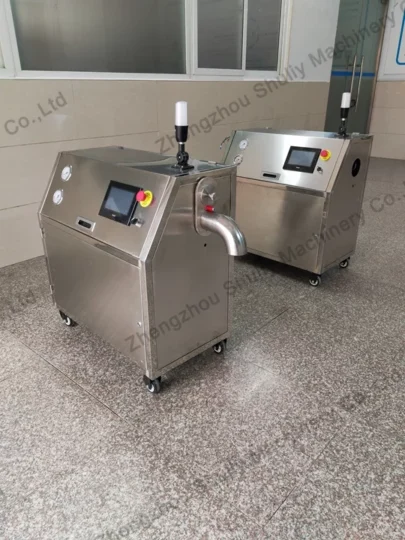
For businesses with regular or high-volume cleaning requirements, a dry ice cleaning machine can be combined with a dry ice pelletizer machine and an insulated dry ice storage container.
This setup allows businesses to produce dry ice pellets on-site, store them before use, and feed them into the blasting machine as needed. It can help reduce dependence on external dry ice suppliers, although storage time, sublimation losses, and production capacity should be considered when designing the system.
We can recommend equipment configurations according to your cleaning application, daily operating hours, contamination type, and required dry ice consumption.
Why Choose Our Dry Ice Cleaning Machine?
Our dry ice cleaning equipment provides a practical solution for industrial maintenance and surface cleaning. Different configurations can accommodate various production environments, from smaller workshops to larger manufacturing facilities.
- Multiple machine configurations to suit different cleaning tasks.
- Adjustable dry ice feed rates for flexible operation.
- Dry cleaning without water or chemical solvents.
- Suitable for a wide range of compatible industrial surfaces.
- Optional dry ice pelletizer and storage equipment for an integrated solution.
结论
Looking for a suitable dry ice cleaning machine for your business? Contact us with details of the surfaces you need to clean, the type of contamination, and your expected daily workload. Our team can help you select the appropriate machine, confirm compressed-air requirements, and provide a quotation based on your needs.